

Microsoft Windows Mixed Reality review: Easy to set up, hard to use - andersonwhernswille

Microsoft
Hardware doesn't really have an "Early Access" period per se, the way games often do nowadays, but I've put off writing about Microsoft's Mixed Reality headsets for essentially that reason. A half-dozen headsets emerged last October with few games and straight less fanfare. To make matters worsened, they were locked to the Windows 10 Store at launch, qualification it particularly plain to those who'd already amassed a sizable sum of money of VR content on Steam.
That sin wasn't corrected until December when Microsoft added rudimentary SteamVR support—in exploratory. And it wasn't officially rectified until nigh a workweek ago, when Windows 10's April 2018 Update coincided with SteamVR-happening-Interracial-World getting the 1.0 seal of approval of approval.
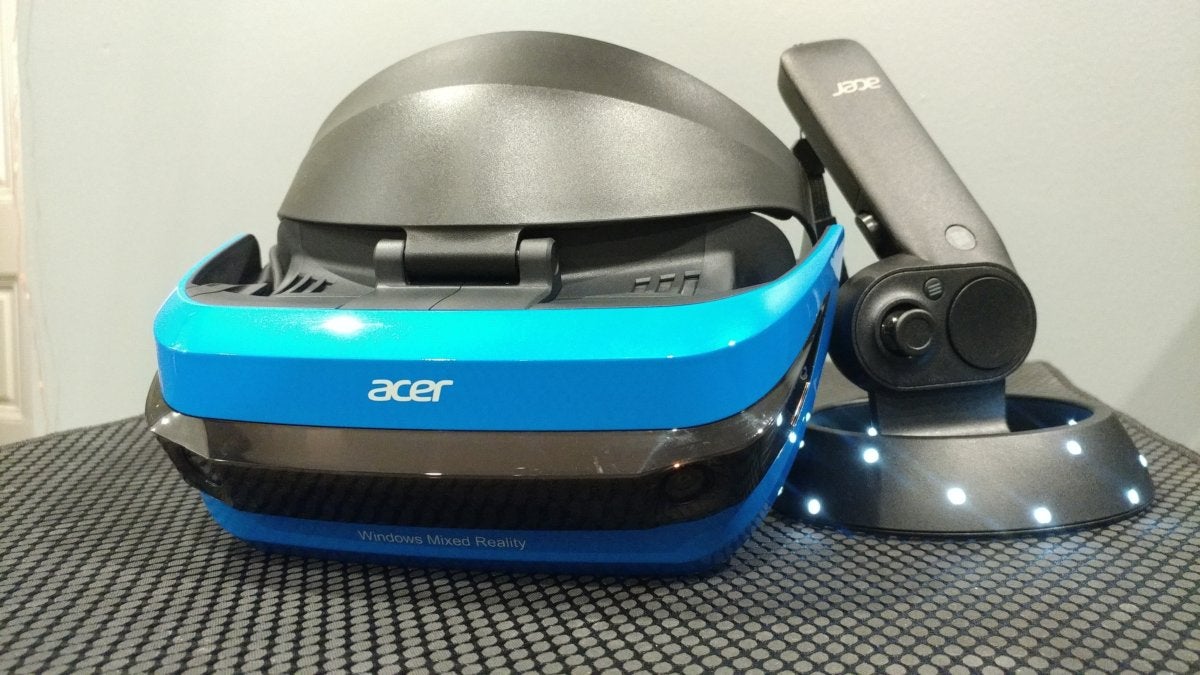
Indeed I dug stunned Acer's Windows Mixed Reality headset ($400 along the Microsoft Store) to give it a whirl. This is, I guess, about as finished A Windows MR's first generation is going to get. To comprise honest, not very much has changed though. More software has not fixed fundamental problems with the Windows MR hardware.
An old hand
 IDG / Hayden Dingman
 First, Army of the Pure me bank note: I'm coming to Windows Mixed World A a virtual reality veteran. I've been masking this wave of VR headsets since the primary Optic Developer Kit.
It's a bias, and indeed I'm making information technology exonerate up front. I've used punter VR kits, and a lot. I mess around with my HTC Vive every week, often multiple times a calendar week, and have for two years now. I've watched the Oculus Break acquire from a prototype to a fully fleshed-out mathematical product. There's room taboo at that place for the "Windows Mr is my first VR headset" vantage point, and I'm bound someone's handwritten that review. And in that context, I think Windows MR has some points in its privilege.
Inferno, as a VR vet there are still some aspects of Windows MR I appreciate. The resolution, for one. The Acer headset I've been testing boasts 1440×1440 per eye, a noteworthy increase over the Rift and Vive's 1080×1200 per eye. Windows MR looks clearer and crisper, and without needing to spit up $800 for the Vive In favor of. That's superior.
 IDG / Hayden Dingman
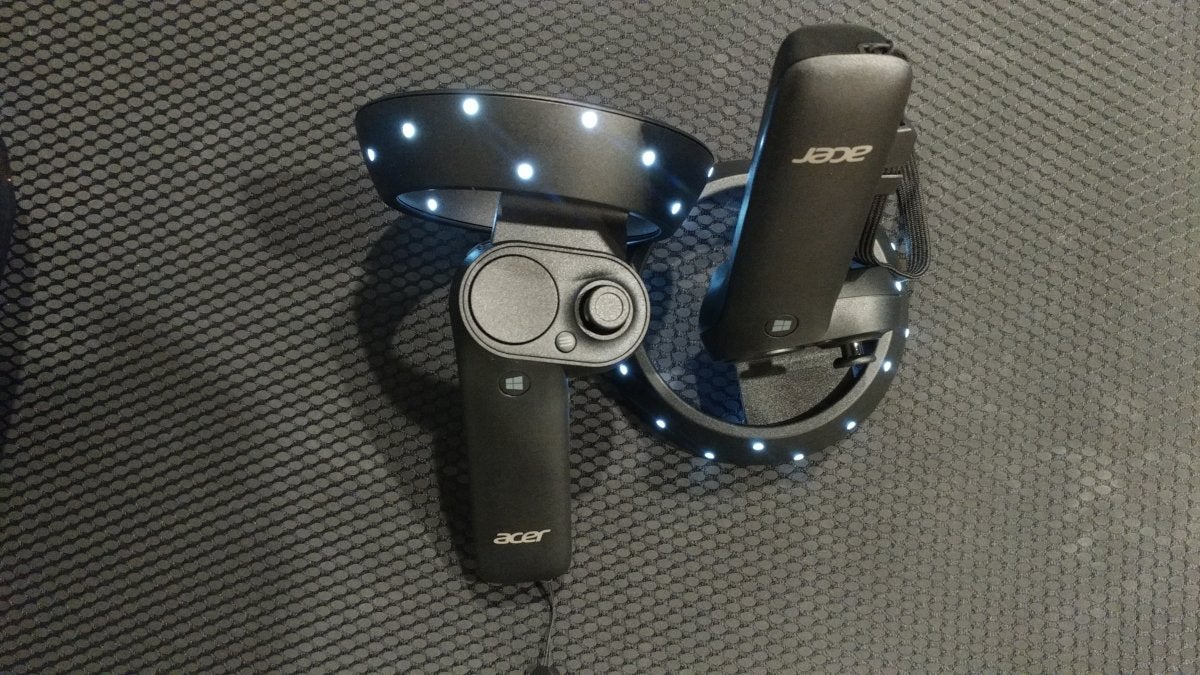
 Microsoft's Windows Mixed Reality controllers.
I likewise think the controllers are, for the most character, well-designed. They blend close to of the C. H. Best aspects of the Vive and Rift, with some trackpads and analog sticks, easy-to-grasp triggers and grip buttons, and a within reason slim form. Eye Touch nevertheless gets the win in this category, but Microsoft's Windows Mixed Reality controllers feel a great deal better than the Vive wands.
My only complaints:
- They use AA batteries. Oculus Advert does the synoptical, but I prefer the collective-in rechargeable batteries of the Vive. Indisputable, it's a rough-and-tumble when they die, simply information technology's also a hassle for Maine to call back to have AA batteries on-hand.
- They pair with Bluetooth—not really a authoritative feature on most self-built play rigs, arsenic Bluetooth is usually reserved for high-end motherboards (for whatever reason). Luckily I had a dongle lying around, but you'd think up a $350 headset would ship with the hardware to cover such an patent border-case. A USB dongle is, what, $10?
- The haptic feedback (rumble) is weak. IT's on that point now, at any rate for some games, but barely.
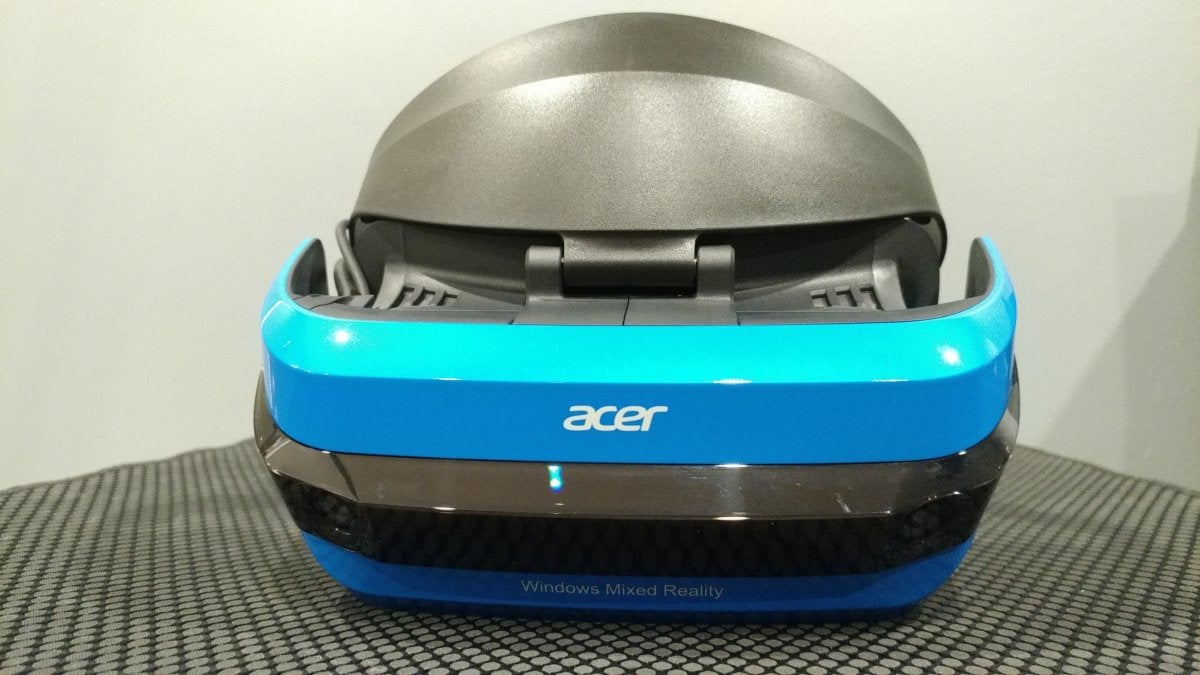
Then there's the headset itself. Acer's is…well, not an implausible design. I'm not a rooter of the azure, nor how plastic the whole device looks. The display also gets uncomfortably warm, even more so than the Vive and Rift, and the want of headphones is a shame.
 IDG / Hayden Dingman
 That said, it's pleasantly whippersnapper and I love how the visor snaps up out of the direction when I want to take a quick break. IT's clear some cues have been taken from the PlayStation VR and HoloLens, and that's non in the least a bad thing. For the record, strange headsets I've tested (corresponding Dell's Windows Mixed Reality hardware) consume been even more comfortable, and Samsung's headset does have built-in headphones. You've got options.
A lost hand
But lease's enter the tracking, because it's the core of the Windows MR ecosystem across all headset models and also where, equally a longtime VR evangelist, it starts descending apart for Pine Tree State.
Windows MR headsets depend on wrong-side-out tracking—specifically, optical inside-out tracking. I clarify because technically the HTC Vive also uses turned tracking, but does and then by blasting the Vive with lasers from its two Lighthouse base stations.
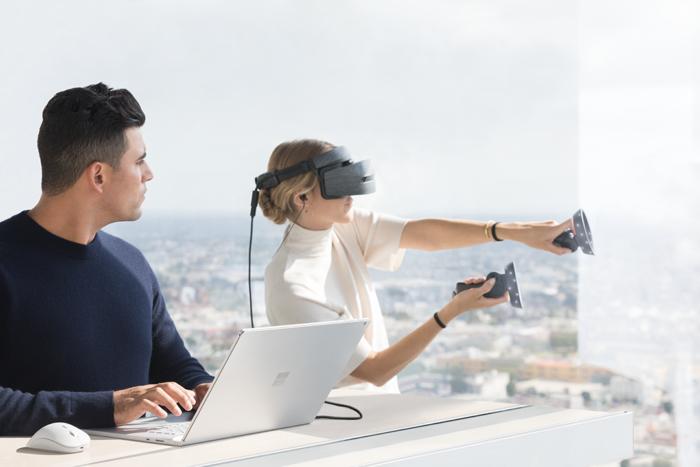
The inside-out tracking used by Windows MR is done without base Stations. The 2 cameras on the front of the headset analyze your surround, looking for any characteristic features—artwork, your computer monitoring device, a bookshelf, whatever. It then uses this to orient itself while you play. Pretty cool, huh?
 Microsoft
 And I have to say, I'm impressed with what Microsoft did manage. Position trailing for the headset itself is remarkably solid, and I haven't had any floating-six-feet-above-the-digital-ground horror stories like I did at PAX last come. For certain, the quieter confines of my apartment are a much better display case for inside-out tracking than the chaos of a conference showfloor. Given this is essentially the first mainstream attempt at camera-driven inside-out tracking? It's encouraging for the future.
Thither are certainly benefits, too. Information technology's way easier to set up a Windows MR headset than a Vive operating room Rift. You just punch the headset in, run through the apparatus tutorial, and you're good to go, making Windows MR great for go off in particular. No need to light desk space to position the base stations, or mount anything to the wall. The only cumbersome bit is you bear to carry the headset around the entire space to calibrate way-descale instead of, like the Vive and Rift, using the controllers. That's only a small drawback though.
But there's a via media, and it's the hand-tracking. Without base stations, Windows Mixed Reality has to rely on those same anterior-facing cameras to know where the controllers are.
 Microsoft
 The trouble: Your hands aren't always in front of your present. Sometimes they're down at your waistline while you're looking up. Sometimes you look left and your hands move right. Sometimes your hands are behind your back.
You might retrieve "Satisfactory, but ordinarily they'ray before of your face, especially in VR" and you'd be right hand.Normally, they are—but if my clock with Windows MR is anything to go by, problematic situations crop awake Thomas More often than you opine.
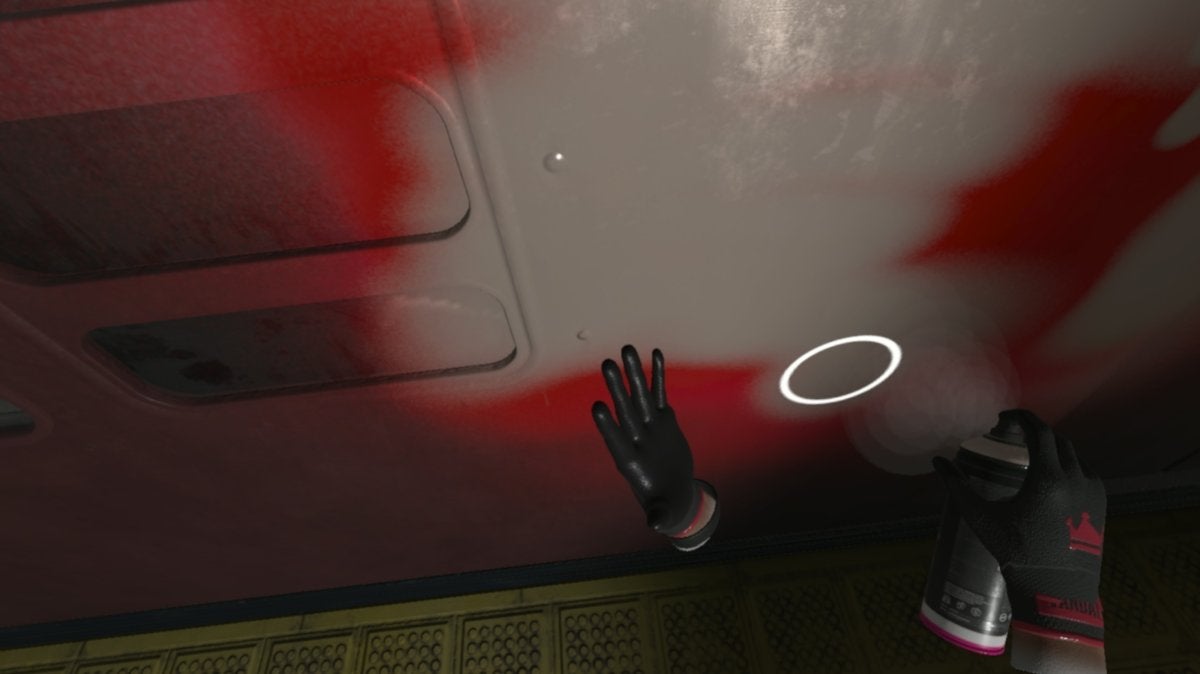
In Google Earth VR, for representativ, material possession your left controller up to your chin up triggers Street Eyeshot. On Windows MR, since your chin isn't in the narrow tracking zone, that activity has a drug abuse of non triggering properly, or break prematurely as soon as you move your head to look around. InJob Simulator, throwing objects is at the best an approximation of movement as the system tries to estimate your direction and tip. InKingspray Graffiti, putting my non-spraying hand at my slope was enough to cause it to bug.
 IDG / Hayden Dingman
 My left hand was behind my back when I took this Kingspray screenshot, but you wouldn't get laid it from the glitched-out floating script that materialized before of me.
And more active games are worsened. Audioshield has you block entrance projectiles from some left and right, often in the periphery of your vision. With Windows Mr, I found the controllers systematically lost sync with my actual hand placement, making the game all but impossible to play accurately. Obeisance-and-pointer games like Holopoint or Skyrim's bows are also a challenge, and swinging stuff around in Gorn felt hit-or-miss and sloppy.
[ Further reading: The best VR games ]
Not to say Oculus and HTC don't have their possess tracking issues. Oculus's cameras consume a narrow tracking cone too, and I regularly wealthy person problems using the Touch controllers near the ceiling or down towards my floor. It's as wel possible to close u both Vive base Stations of the Cross too, albeit much harder.
With Windows MR it's constant, though. Even undecomposable, everyday actions can get problems, like keeping one hand over down pat at your waist while you enjoyment the other to click through menus—maybe 10 percent of the time, the controller at your waist leave suddenly materialize in front of your eyes, as if your hand had spontaneously teleported trine feet upwards.
 Mark Hachman/IDG
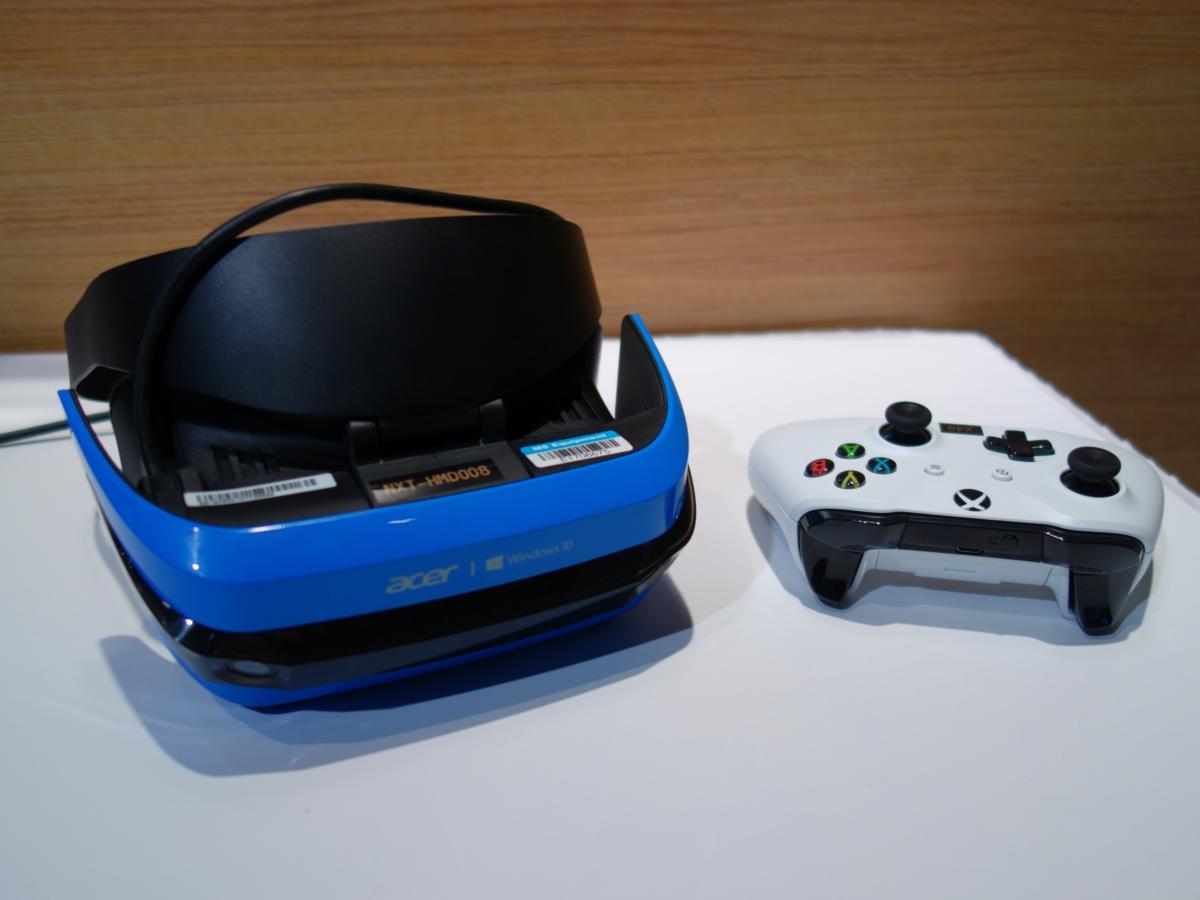
 Windows Amalgamated Reality headsets can also employment an Xbox Controller for some games.
It adds up to a subpar experience—at least for Maine, with the options I experience. Again, this is coming from a seasoned VR drug user. Novices? Probably fine. Heaven knows Windows Mixed Reality is more polished than that original Oculus Developer Kit, and spine in 2013 I was amazed by my early forays into VR. I expect a VR beginner could walkway into a Microsoft store, try happening this Acer headset, and believe I'm nitpicking.
I think more experienced users are bound to Be frustrated though. I know I have been. The moments when it all breaks, when you'rhenium yanked out of a tense moment to watch your helping hand float off into space? Information technology's anathema to what I like just about VR, which is when I forget I'm wear it. That's hard sufficient to accomplish with the Vive and Rift, and even harder with Windows MR.
Get a hand
I should also take a moment, ahead we wrap skyward, to touching on Windows Heterogeneous World's SteamVR financial support. After all, that's what prompted Maine to snap out the Genus Acer headset again. Faithful its word, the headset does run SteamVR games now—although that process is also a bit ugly. I'm sensing a pattern.
SteamVR is built on OpenVR, which to quote Valve is "an API and runtime that allows access to VR hardware from multiple vendors without requiring that applications have specific knowledge of the hardware they are targeting." The end result: SteamVR will mechanically find whether you're running an Oculus Falling ou or an HTC Vive. You don't have to set.
 Microsoft
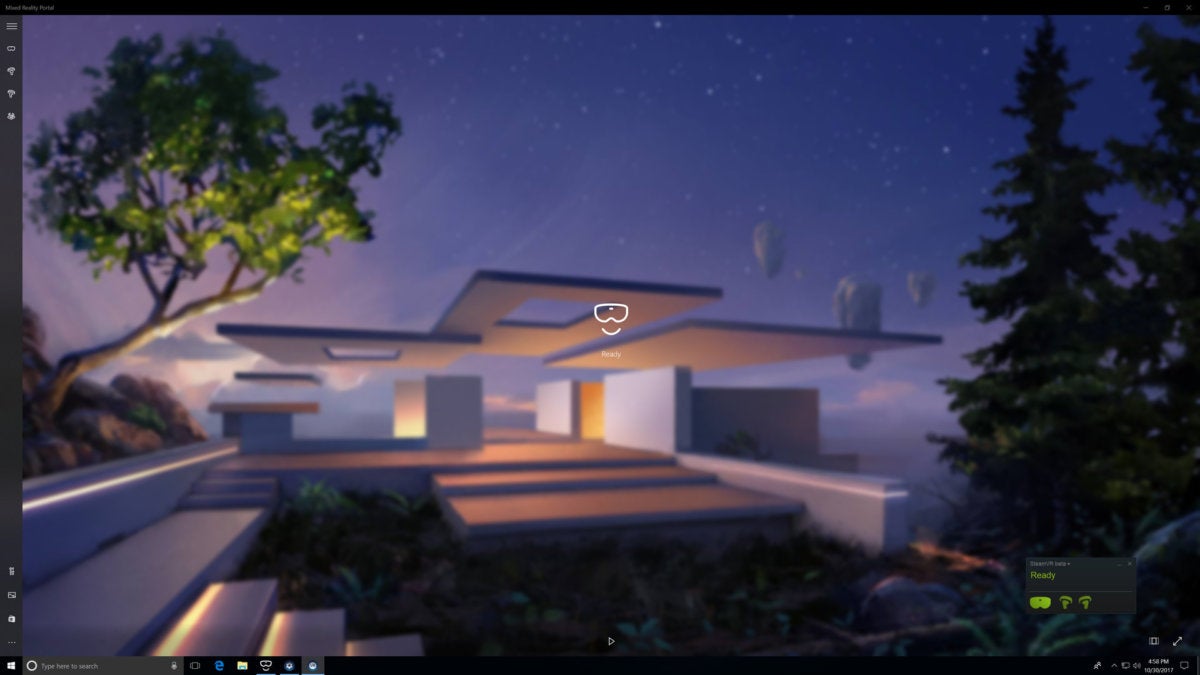
 Windows Mixed Reality's Cliff House.
Thus I expected Windows MR to be the same. Non quite, though! You really need to download a Windows MR software system utility through Steam, run that, and so the standalone Windows MR program (running through the Windows 10 Store) launches in turn. Windows Mister then treats Steam as a program gushing inside the Windows MR "Cliff House" environment, the same as any Windows 10 Store app.
This is where SteamVR through Windows MR starts to suit weirdly infelicitous, as Microsoft reserves some of its accountant functions for its own needs. Therefore, to simulate the Vive's menu button you don't press the same menu release on a Windows Mister controller—that boots you back to the Cliff House, minimizing SteamVR.
No, alternatively you click in the left analog stick to access the Vive menus, a motion I noneffervescent haven't gotten accustomed to. It's doable, sure, merely you immediately get a "This isn't native functionality" vibe from it, corresponding trying to bet a racing game with a computer mouse and keyboard.
In any case, it works. That's bound to be complete that really matters to people who do end up purchasing a Windows MR headset—most games run fine, within the aforesaid hand-tracking constraints. You can also get Oculus games up and running through ReVive, with decent results.
Bottom line
 Microsoft
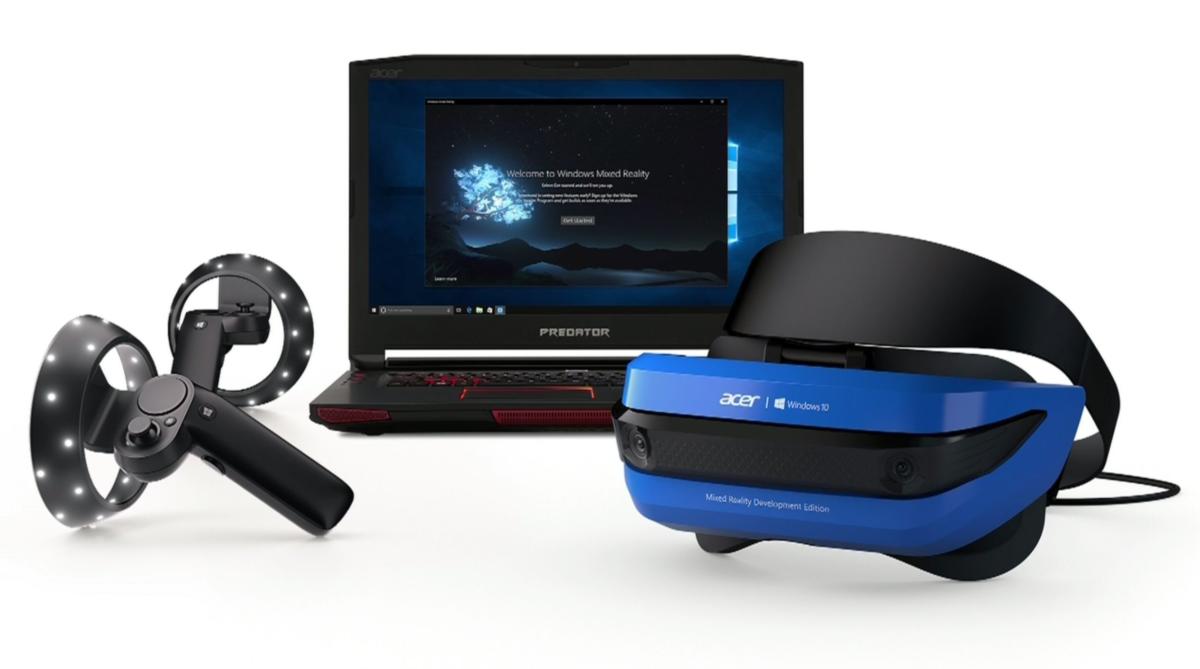
 Unless you're really averse to setting up base stations, the Eye Breach is an completely-around better VR experience. That power not have mattered had Microsoft released a year earlier, when the Rift was $600 and the Vive at $800. At this point though, the Rift is down at $400 permanently. That's the same list price as the Acer headset.
[ Further recitation: HTC Vive vs. Eye Rift vs. Windows Mixed Reality: What's the difference? ]
To be fair, Microsoft's partners have countered by dropping their prices too. At time of writing, Acer's Mixed World headset is happening Amazon for $240 via a tertiary-party seller, and I've seen prices as low as $200 for other models in new weeks. Peradventur that's a price worth putt up with Windows MR's quirks, especially for first-time VR users. People adapt.
Windows Mixed Reality feels like a substantiation-of-concept, though—especially after using Oculus's Santa Cruz epitome last fall. That headset also uses assembled-in cameras, simply with a overmuch wider field-of-view for tracking so it gets confused less oftentimes. Windows Mixed Reality is an azoic showcase for what I expect becomes the future standard, just it has all the first-gen problems too. A a few too many for me to want to deal with, when the Oculus Breach and HTC Vive are rock-solid alternatives.
Note: When you purchase something after clicking golf links in our articles, we Crataegus laevigata take in a small perpetration. Read our affiliate link policy for more details.
Hayden writes about games for PCWorld and doubles Eastern Samoa the resident Zork enthusiast.
Source: https://www.pcworld.com/article/401917/windows-mixed-reality-review-steamvr.html
Posted by: andersonwhernswille.blogspot.com
0 Response to "Microsoft Windows Mixed Reality review: Easy to set up, hard to use - andersonwhernswille"
Post a Comment